March 4
Night TrainMarch 4 is the decisive temporal hinge of the novel’s investigation: the night Jennifer Rockwell dies, the date from which Mike Hoolihan begins assembling a case, and the point to which later documents and memories repeatedly return. Its clock times offer an unusually exact sequence, but that precision does not settle every question. The date becomes at once a record of what happened and a boundary around what the living can establish about why.
The Date as a Narrative Anchor
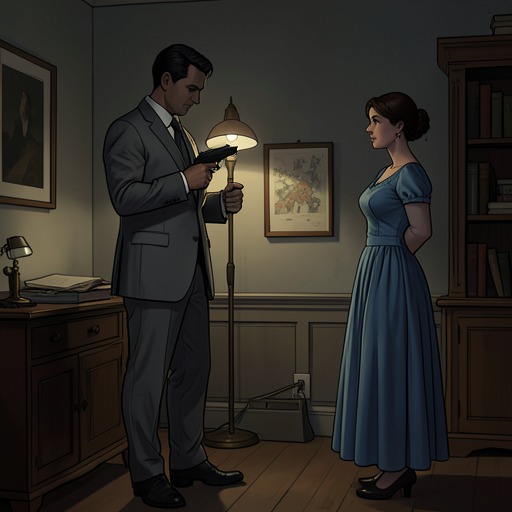
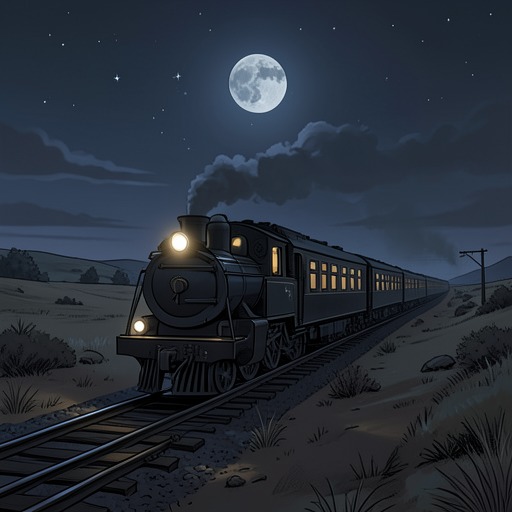
Mike says that the case began on the night of March 4 and that he will tell this portion of it day by day. The date appears as a section heading, then opens onto his recollection of being alone at home at 20:15. Tobe is away at a computer convention; Mike has not begun dinner and is reading a biography when the passing night train wakes him from a doze. The ordinary particulars locate the moment before the telephone call changes its meaning. The train, which passes early on Sundays, is both a practical feature of Mike’s home and a recurring marker of time that will acquire darker associations as he tries to understand Jennifer’s death.
The narrative’s later account supplements this first-person recollection with a case-folder chronology. Mike revisits the file for every detail, including the odometer reading from the unmarked car he and John Macatitch drove that night. The movement between remembered experience and recorded times makes March 4 more than a setting: it is the event’s organizing measure, repeatedly checked as Mike tries to shore up the sequence in his mind.
The Evening in Recorded Time
At 19:30, Trader Faulkner is recorded as the last person to see Jennifer. He says he took his leave as he did on a Sunday night, and her apparent mood is described in the folder as cheerful and normal. That account supplies the final ordinary point in the sequence, but the qualification apparent matters: it records how she seemed to someone else, not what she privately knew or felt.
At 19:40, an upstairs neighbor is woken by a shot and calls 911. Ten minutes later, a beat officer arrives. The neighbor has spare keys to Jennifer’s apartment, and the officer uses them to enter and find her. At 20:05, Tony Silvera receives the call in the squad room and is told the victim’s name. At 20:15, John Macatitch summons Mike, who is at home; at 20:55, Jennifer is pronounced dead. The sequence moves from a last visit through a neighbor’s alarm, police response, notification, and formal confirmation. Each entry narrows the interval in which events can be placed without opening access to Jennifer’s experience of them.
The immediate aftermath also belongs to the date’s timeline. The account states that twelve hours later Jennifer is cut, placing the postmortem examination close behind the death in the chronology. At the Medical Examiner’s office, the Latin inscription about silence, laughter, death, and the service of the living gives that institutional setting a formal motto. The case’s movement from the apartment to examination is thus both procedural and thematic: the investigation turns toward physical evidence, while Mike will later attempt a different kind of examination through records and recollection.
From Evidence to an Undetermined Finding
The later investigation confirms that Jennifer killed herself, but the legal classification remains unsettled. On March 16, Mike reflects that suicide is treated as a crime in the city, even though a person who crossed the state line before dying would have escaped that particular jurisdiction’s law. He describes the paradox as a crime that does not escape detection but does escape punishment. The observation shifts attention from the act itself to the legal system that names and handles it.
Mike sets the modern case against an older history in which a coroner’s office was associated with taxation and the property of people who died by suicide could be forfeited. In the present, the coroner works through the Chief Medical Examiner’s office. Jeff Bright, a friend of Tom Rockwell, returns a finding of Undetermined. Tom had pressed for an accidental classification, but accepted the finding that Mike and others ultimately accept as well. The date therefore leads not to a definitive public account of motive, but to an official category that preserves uncertainty even as the investigation establishes the manner of death.
The Date Reconstructed Afterward
The narrative does not remain within the clock-time of March 4. After the funeral, Mike makes a list headed Stressors and Precipitants, beginning with questions about Trader and money. Its orderly form promises a causal explanation, but Mike later finds its contents vague. The list is part of a retrospective inquiry: evidence is gathered after the death, when the person who could explain it is no longer available to answer.
The psychological autopsy gives that inquiry its name. Mike compares his work with a pen, tape recorder, and computer to Paulie No’s work in the Medical Examiner’s office, while distinguishing the tools rather than claiming that either procedure can restore Jennifer’s point of view. Among the material Mike later encounters is Jennifer’s recorded message to her lover. She says that nearly a year earlier she began to feel that she was losing control of her thoughts; she had not gone to Tulkinghorn because she feared he would tell her father, and she tried to address the problem herself. She also discloses treatment with varying doses of stabilizing medication since the previous May, and says the medicines had stopped helping. This information changes the reader’s understanding of the apparently normal account from March 4, but it does not turn that account into a complete explanation of the death.
Recurrence and the Limits of Seeing
The date returns through the contrast between visibility and understanding. On the evening Jennifer dies, the sky is clear and visibility is excellent, yet Mike concludes that the seeing was no good. The image distinguishes the ability to observe from the ability to interpret: investigators can assemble times, testimony, physical findings, and later disclosures, while still lacking a fully knowable account of the mind behind them.
The passing night train frames that limit. It is present in Mike’s first recollection of March 4 and returns in his later awareness that it has passed during the night. Its movement marks time continuing without regard for the case, while its recurring image gives the investigation a route into darkness that cannot be reversed. March 4 consequently remains both a carefully documented night and an unresolved human loss: the chronology can establish when Jennifer was last seen, when the alarm was raised, and when she was pronounced, but the surviving evidence cannot make the final explanation certain.